The Developer AI Journal: Bridging the Pedagogical Gap in GenAI
 The Prompt Logger
Project Overview
As Generative AI becomes a ubiquitous co-pilot in software development, the challenge for educators shifts from preventing its use to integrating it professionally. The Developer AI Journal (or Prompt Logger) is a research-led tool designed at the University of Sydney to transform AI usage from a hidden shortcut into a transparent engineering artifact.
The project aims to answer a critical research question: How can we foster ‘Human-in-the-loop’ accountability while using LLMs in project-based learning?.
Key Capabilities
- Multi-Platform Ingestion: Automated fetching and parsing of shared chat links from Gemini, and Microsoft Copilot to ensure high data fidelity.
- Reflective Taxonomy: A structured framework requiring students to categorise AI accuracy and justify their manual interventions.
- Professional Audit Trail: Generates version-controlled logs that serve as ‘Evidence of Work’ for group projects and individual assessments.
- Pedagogical Analytics: Real-time monitoring of student ‘Evaluation Confidence’ vs. ‘AI Accuracy’ to detect skill gaps and over-reliance.
The Tool in Action
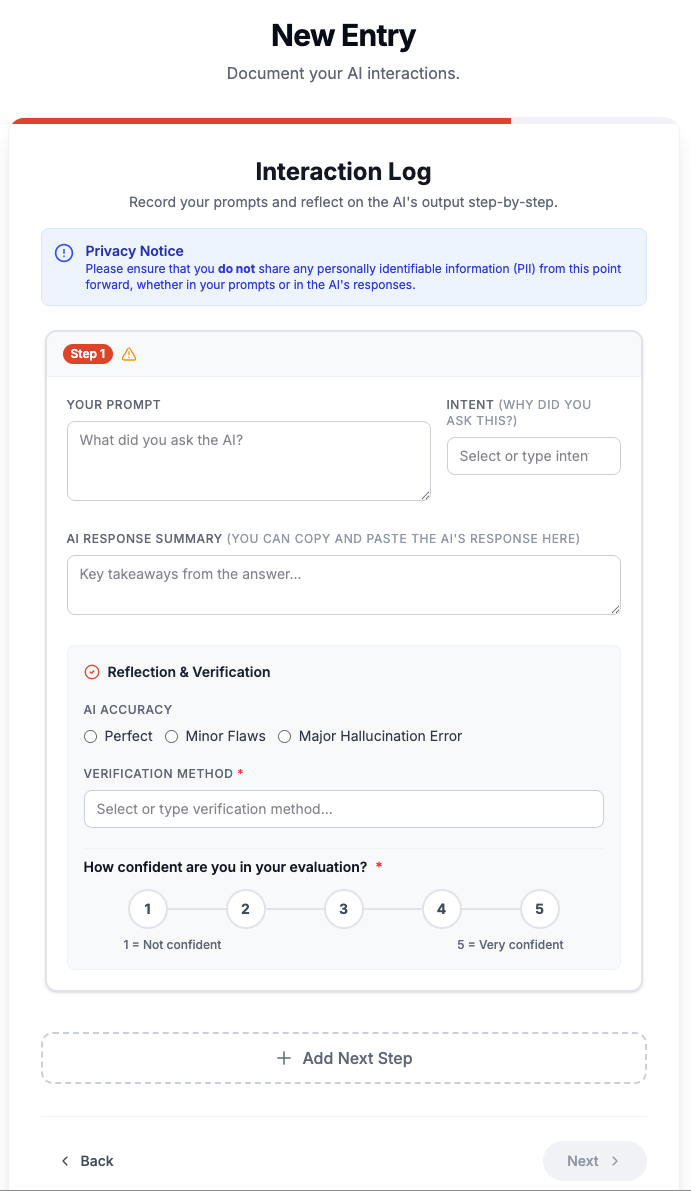
Engineering Ethics & Narrative
To introduce these concepts to students, we utilise a series of case studies and visual narratives. These stories highlight the “Accountability Gap” and the long-term career risks of “Cognitive Offloading.”




Research & Teaching Impact
Currently deployed in ELEC1005 (Introduction to Software Engineering), this tool provides the telemetry needed for longitudinal studies on student personas and learning trajectories in the age of AI.
The goal is to move students from being ‘Passive Consumers’ of AI to ‘Proactive Regulators’ of the technology they deploy.
